No products in the cart.
What We’re Fed — and What We’re Fed Up With

M.J. Mercury
April 15, 2026

As nutrition advice keeps changing, so does our trust in who’s giving it
Maybe the earth is flat and the moon landing was fake, but at least the food pyramid is back.
I must admit that opening sentence was set to lure you into this story, but that’s only because, at its outset, it might seem like a rather boring topic; yet there is an important hidden interest here — and it’s not just about food. It’s about a new reality where most of us can’t really tell what’s real and what’s not.
And no, this isn’t about AI — that’s a story for another day.
In an effort not to lose you entirely, take a look at the diagram below. It offers a quick snapshot of the history of the food pyramid — and more importantly, how often the message has changed.
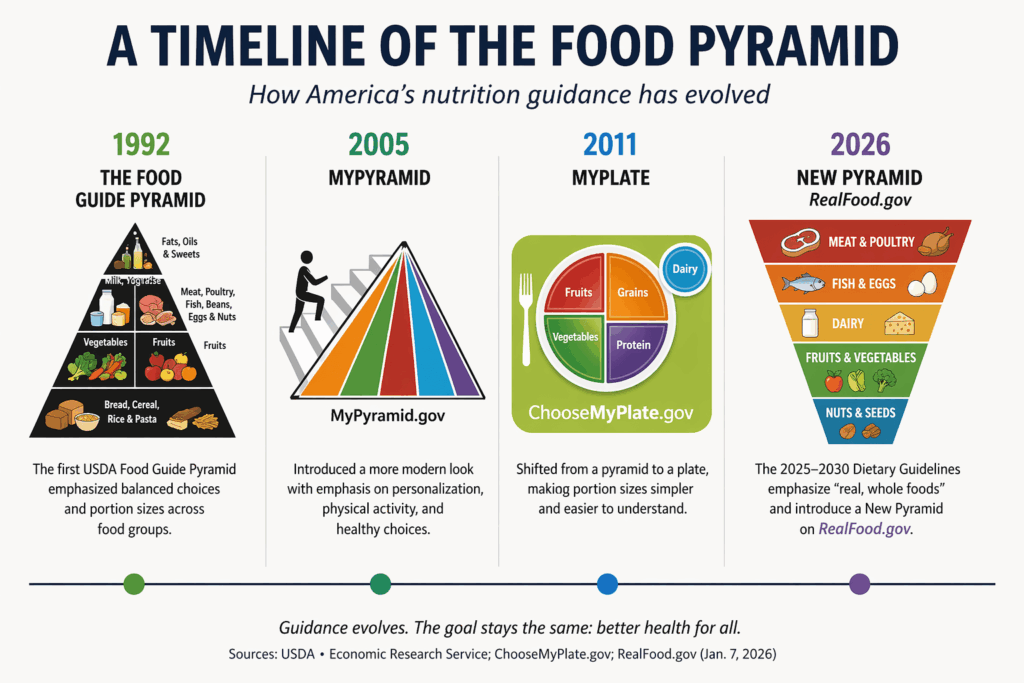
But what matters more is who is behind the pyramid, the plate, and now this newly inverted pyramid — and what it promotes.
For years, people have been advocating for a plant-based diet as a way to avoid heart disease, chronic illness, and obesity. But that message didn’t start with official guidelines. It came from real people — it was everywhere, from documentaries and YouTube to bloggers and families sharing what they were actually eating day to day. Real food came from real life — not just policy.
As recently as January 2026, new dietary guidelines were released alongside messaging from Secretary of Health and Human Services Robert F. Kennedy Jr. and the United States Department of Agriculture, emphasizing a return to what is being described as “real food,” as outlined in the Dietary Guidelines for Americans and the real food initiative.
But for those of us living a plant-based lifestyle, “real food” means something different than what the government is promoting. While the official model remains MyPlate, the renewed emphasis on “real food” — and what some interpret as a reworking or inversion of the traditional pyramid — leans toward more protein, fats, and whole foods, including meat and dairy — not exactly the version of “real food” a plant-based lifestyle promotes.
And even though it’s just as important to look at who is behind the changes, we need to first consider what those changes are telling us — and the meaning behind “real food,” especially for those of us living a plant-based life. Because “real food” only works if we all agree on what it means.
And right now, we don’t.
The Meaning of “Real Food”
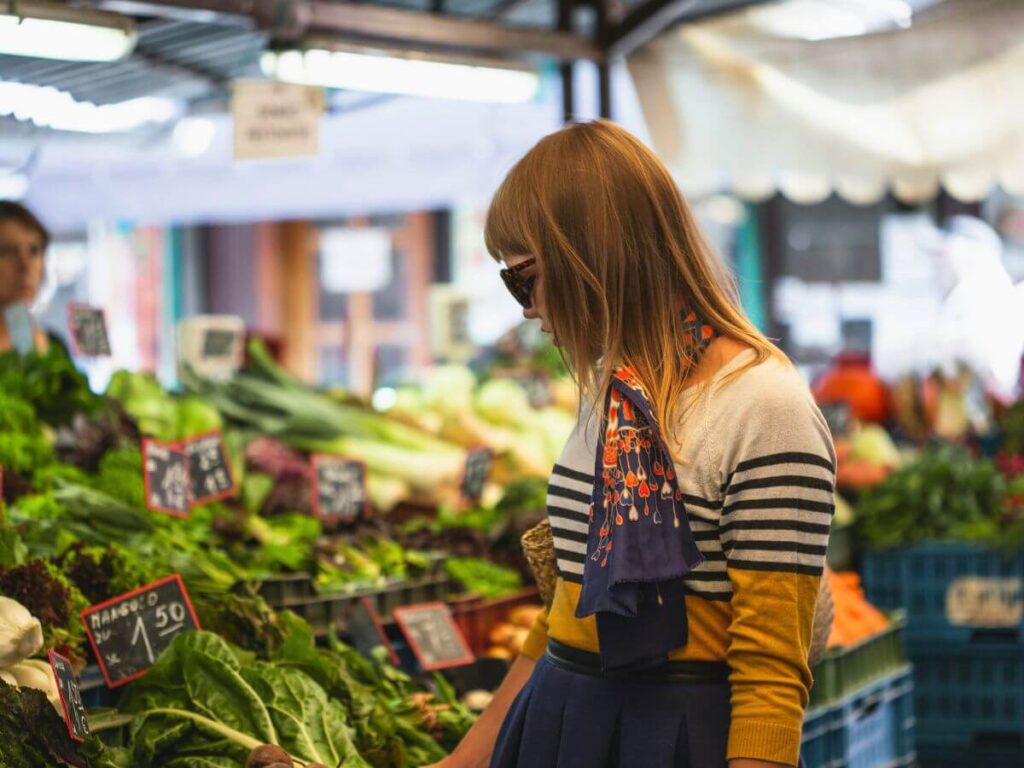
When the same phrase is used to push different ideas, it stops being helpful — and starts raising questions. “Real food” is a perfect example. And not just about what we’re eating, but about who gets to decide what “real” even is. So now the question becomes — who should we actually listen to? The government, with its updated guidance telling us one thing. Or the people — the ones we’ve been watching, reading, and learning from for years — showing us something else entirely.
For those of us living a plant-based life, this shift feels like a contradiction. Not just because the guidance keeps changing, but because “real food” already means something — and now it’s being used differently. It’s not just about what we’re told to eat, but about who we’re supposed to trust. At some point, it gets confusing.
And maybe that’s the real story here. Not just what we’re fed, but what some of us are starting to feel fed up with.
That also might be why the world is starting to feel a little more like a conspiracy theorist’s playground, where everything is up for questioning — from the food we eat to the moon landing, to why we just spent billions of dollars to send astronauts around the moon … on April Fool’s Day, no less.

If you’re interested in more thoughts like this — the ideas, questions, and curiosities around how we eat — you can join me in my weekly column, Life Edit on Substack.
(Visited 35 times, 1 visits today)
Leave a Reply