

No products in the cart.
Get Off the Table. Get On the Blanket.

M.J. Mercury
April 9, 2026
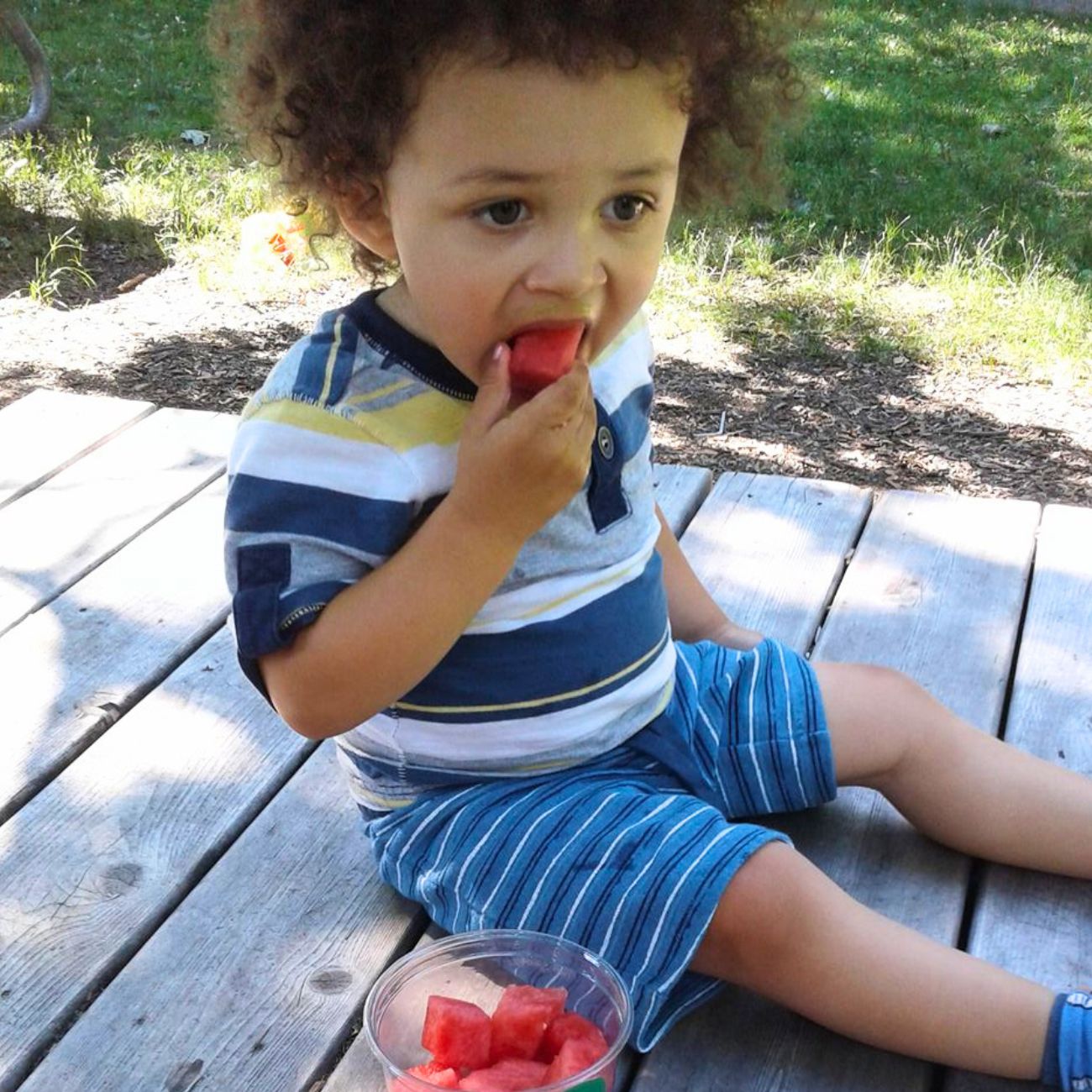
Outdoor meals work for kids — and parents can use that to their advantage
If you have children — whether they are sensory seeking, sensory avoidant, or none of the above — there’s a good chance at some point they’ve ended up under the table at a restaurant, or halfway on top of it, while a meal sat untouched in front of them. t’s often treated as behavior. But with National Picnic Day landing on April 16, there’s an opportunity to look at it differently — especially for those of us in colder regions, where the return of outdoor eating feels like a long-awaited shift. Because for many families, eating outside doesn’t just feel easier — it is easier.
Unpack the picnic basket
The question isn’t simply why kids eat better on a blanket. The more useful question is this: what is it about the outdoor setup that works — and how can parents use that intentionally to create a mealtime experience that works for both them and their child?
Start with movement
At the table, stillness is part of the expectation. Things like “sit down,” “stay seated,” and “get out from under the table” or “off the table,” are demands little ears don’t want to hear from adult mouths who don’t want to repeat them.
For many children — particularly those with sensory needs — that level of control can interfere with eating. Movement isn’t a distraction from the meal; it’s often how their body stays regulated enough to participate in it.
Outside, that expectation softens. A child can kneel, stand, shift positions, or briefly move away and return without disrupting the meal entirely. The structure doesn’t disappear, but it becomes flexible enough to work with the child instead of against them.
Then there is the waiting part …
Meals at a table, especially in restaurants, come with built-in delays — waiting to order, waiting for food to arrive, waiting between courses. For children, that time can build pressure before eating even begins. Hunger turns into frustration, and frustration often looks like refusal.
On a blanket, food is typically ready and accessible. It is unpacked, visible, and immediate. Children can approach it at their own pace, starting with what feels easiest rather than waiting through a process they didn’t choose.
The sensory experience
Indoor dining spaces concentrate sound and activity — music, conversation, movement, lighting — into a single, contained experience. Even when it feels manageable to adults, it can be overwhelming for children who are more sensitive to those inputs.
Outdoors, that intensity is reduced. Sound disperses. Light is natural. Space opens up. A child can look away, reset, or shift focus without leaving the meal altogether.
Food presentation plays a role
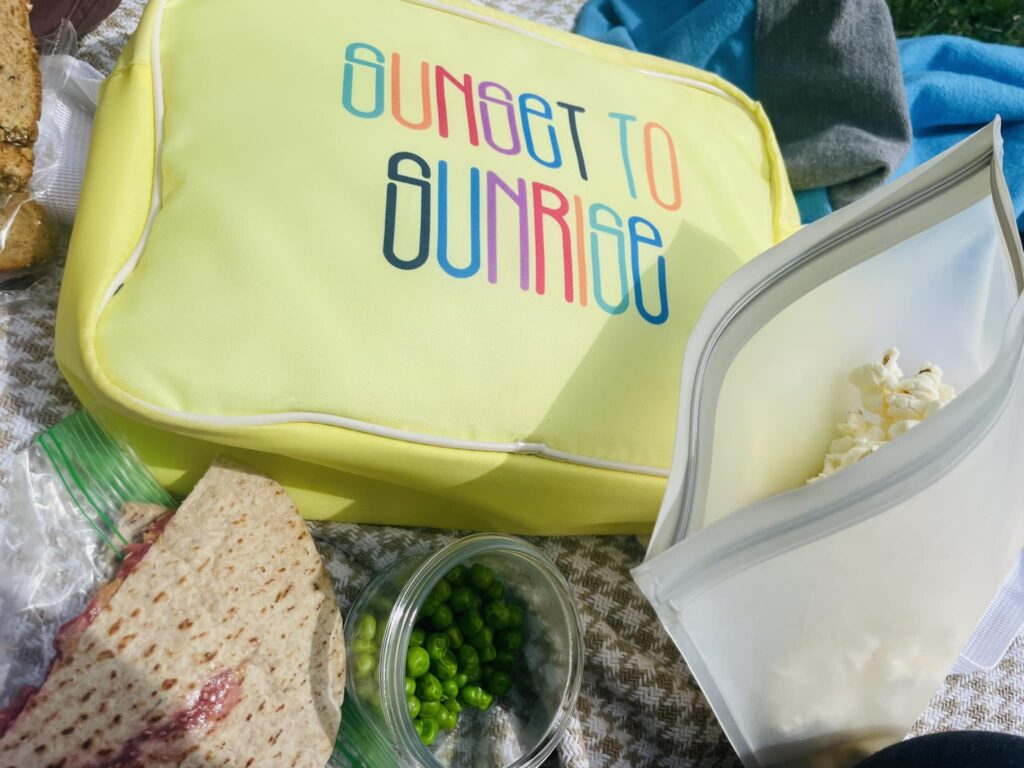
Meals eaten outside are often packed in separate containers — crackers in one, fruit in another, sandwiches wrapped individually. For children who are sensitive to foods touching or mixing, this separation can make a meal more approachable. It removes a barrier without requiring entirely different foods.
There is also more flexibility in how a child engages.
A packed meal tends to include familiar items, and children can move between them without the same level of attention placed on finishing everything. They can eat one thing, skip another, and return later. The structure is still there, but it is less rigid and less performative.
Taken together, these shifts create a different kind of mealtime environment — one that reduces pressure without removing the meal itself.
As outdoor eating becomes more common this time of year, it offers more than a change in scenery. It offers a practical strategy, especially for parents navigating mealtime challenges with sensory kids.
Because sometimes the problem isn’t the food — it’s the environment.
And right now, with the weather shifting, the solution is simple.
Get off the table. Go outside. Take advantage of it.

If you’re interested in more thoughts like this — the small shifts, ideas, and moments that shape how we approach food and family — you can join me in Life Edit, my weekly column on Substack.
(Visited 6 times, 5 visits today)
Leave a Reply