Ever play Mad Libs with your kids and suddenly freeze when it’s time to come up with an exciting adjective? That same feeling hits me when I sit down to write recipe posts — and baking these Banana Bread Breakfast Cookies was no exception … or was it?
No matter how much I love cooking, baking, and feeding my family, I sometimes feel stumped trying to describe food in a way that feels fresh, fun, and true.
So instead of forcing myself to find new words, I decided to turn the problem into a game — one that involved my child, a little learning, and, of course, cookies.
The challenge was simple: who could describe this new Banana Bread Breakfast Cookierecipe using the most adjectives? Whoever ran out of words first lost.
And what does the winner get?
The first cookie, obviously.
Setting the Scene (With a Side of Grammar)
Before we started, I realized my child needed a little refresher on what an adjective actually is. That led us to the first step of this recipe adventure — books.
I’ll admit — I could have gone to the library. In fact, we already had taken this exact book out from the library before, along with other books from the same author covering nouns and verbs. But since we found these books to be incredibly fun and useful, I decided this was one worth owning.
Naturally, I added a few more books to the cart to hit free shipping — noun, verb, and adverb — the whole set.
These are the kinds of books that don’t just get read once and forgotten; they stay in rotation, pulled off the shelf during homework time, writing practice, playing a game of Mad Libs, or moments like this when learning blends seamlessly into everyday life.
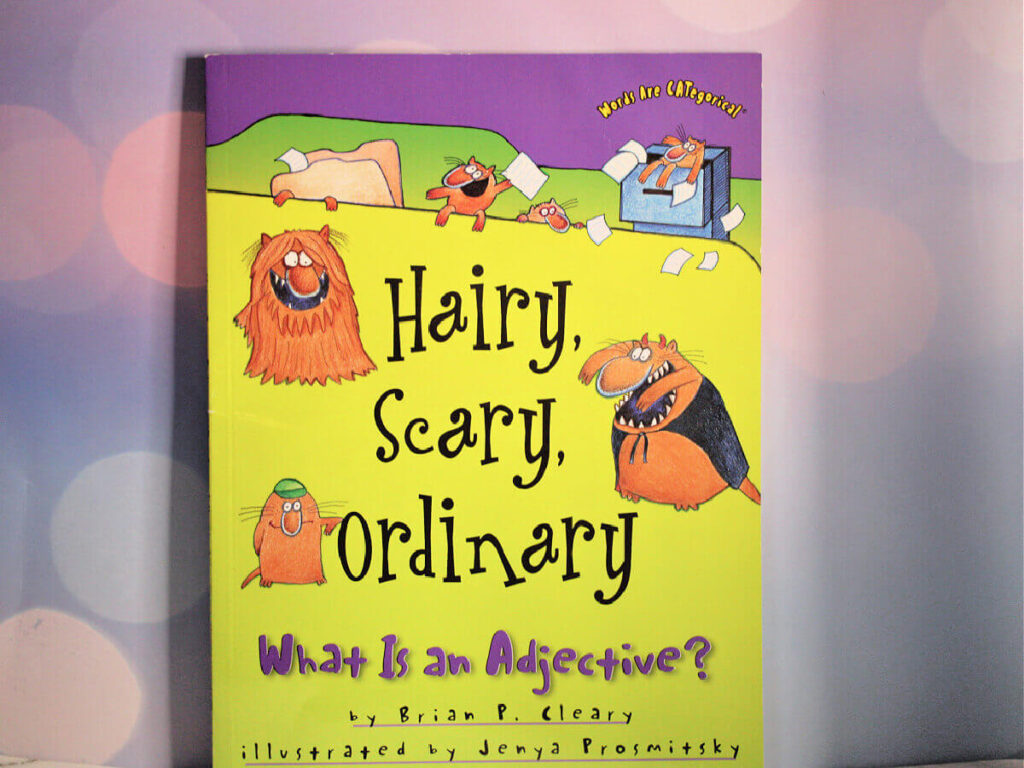
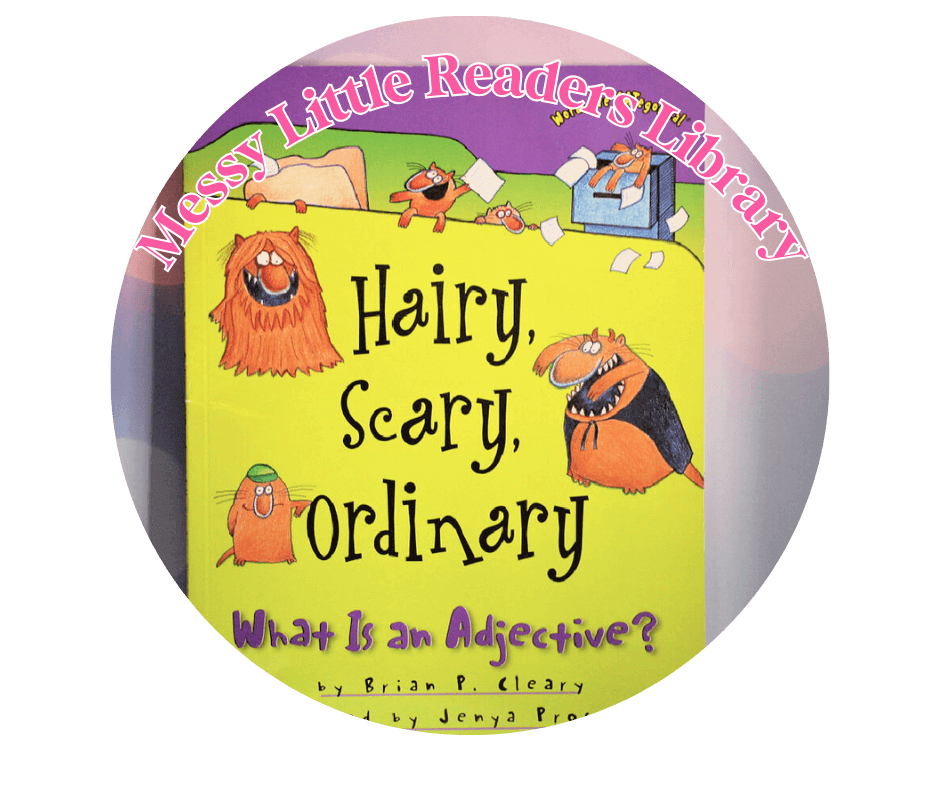
Before we started baking, we curled up on the couch and read Hairy, Scary, Ordinary: What Is an Adjective?together. The book uses playful rhymes and silly examples to show how adjectives describe people, places, and things — which made it easy to spot adjectives everywhere once we headed into the kitchen.
Stirring Up Something Descriptive
The second step was making the recipe itself.
I knew right away that I wanted these cookies to be breakfast-friendly. Something nourishing enough to feel good about serving in the morning, but fun enough that my child would actually want to eat it.
These Banana Bread Breakfast Cookies are designed to be:
Grab-and-go friendly
Naturally sweetened
Soft and satisfying
Easy to customize
Freezer friendly
I chose almond flour, oats, and ripe bananas as the base ingredients — simple, familiar, and wholesome.
Where Words Meet Texture
As we mixed everything together, the adjective game really took off. Without prompting, my child started describing how everything felt.
Here’s how we described the ingredients:
Almond flour – grainy, sandy, soft
Oats – dry, flaky, hearty
Bananas – soft, mushy, creamy
Brown sugar – wet, clumpy, sticky
The brown sugar was the outlier, which made it even more interesting to talk about. Why does it feel wet? Why does it clump together?
My son even showed me how you can make a sandcastle out of it.
Who knew?
Cooking turned into a sensory lesson without either of us trying.
A Beach Made of Brown Sugar
Not every child wants to plunge their hands into sticky banana or grainy flour.
And that’s okay.
If touching ingredients feels overwhelming, you can separate the sensory experience from the recipe and turn it into play first. On a separate day — not during the rush of baking — create a simple sensory bin using your baking ingredients.
No expectations to bake. No pressure to taste. And no requirement to get messy beyond what feels safe.
If they want to build a brown sugar sandcastle and knock it over? Perfect. If they only want to use the spoon and avoid touching? That counts too.
This is what low-pressure sensory exposure looks like.
When kids get to explore ingredients outside the context of “you have to eat this,” their nervous system relaxes. And when their nervous system relaxes, curiosity has space to grow.
Later — maybe that day, maybe next week — those same ingredients won’t feel quite so unfamiliar when they show up in cookie dough.
And when those same pieces move from the sensory bin into the mixing bowl, they take on a new role. They’re no longer just something to scoop or bury.
They’re something to describe.
Add-Ins = Extra Adjectives
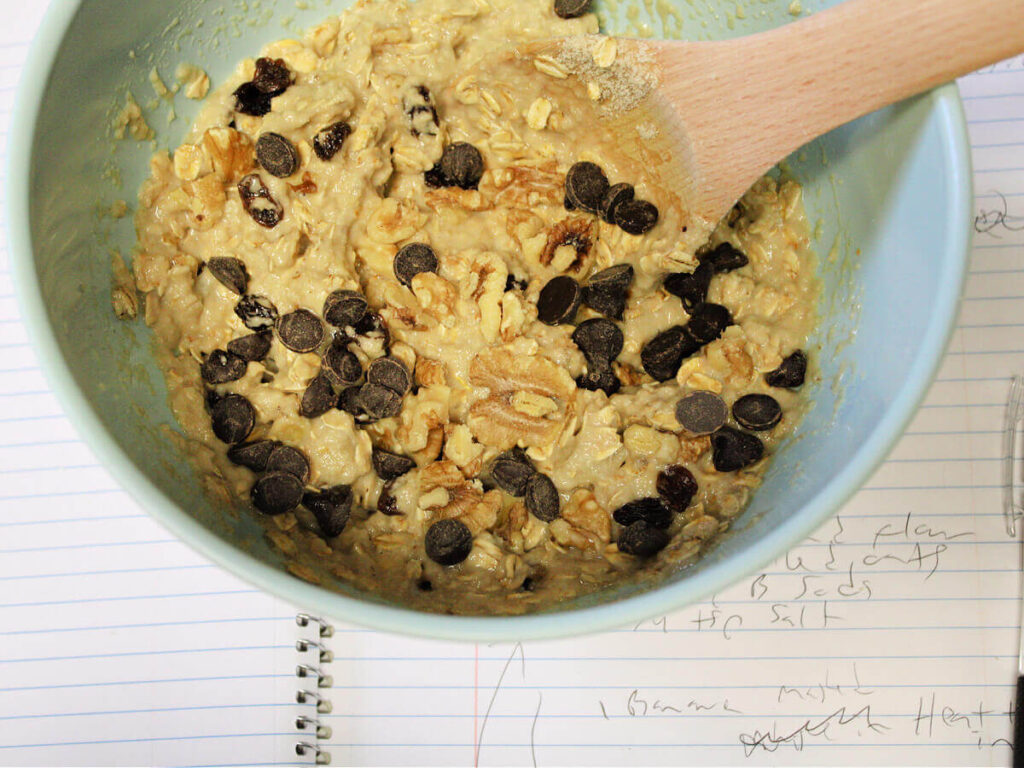
Then come the add-ins — this time as part of the dough — and even more describing.
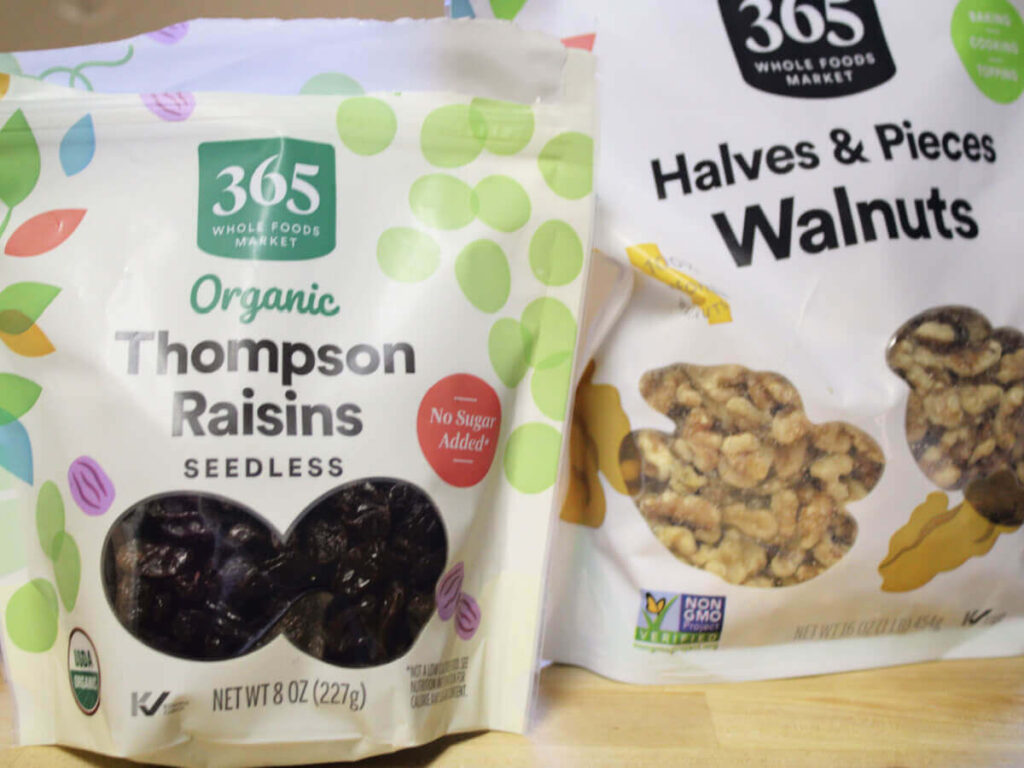
Walnuts – crunchy, nutty, firm
Raisins– chewy, wrinkled, sweet
Chocolate chips – smooth, melty, rich
You don’t need to add all of them. You can use one, two, or none at all depending on your preferences (or your child’s tolerance for “surprises” in food). That flexibility is part of what makes these cookies work so well for families.
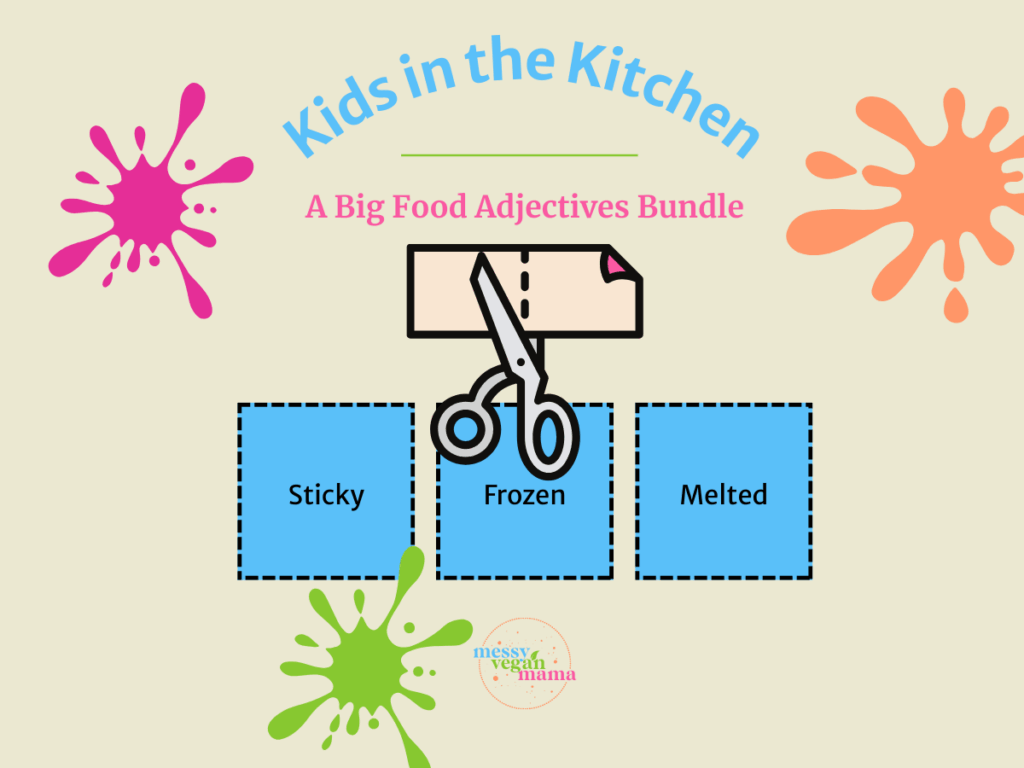
If you’re cooking with kids and want a gentle way to talk about food without pressure, I created a printable Food Adjectives Bundle you can use alongside this recipe. It includes sensory word lists and cut-out cards to help kids describe what they notice while baking — a no tasting required activity.
That’s the heart of the Messy Plate Method — building comfort and confidence through play, not pressure.
Want more from your favorite Food Strategy Nerd?
Get weekly recipes, real-life strategies, and stories about how we actually eat
Banana Bread Breakfast Cookies work the same way. The base is simple and familiar, but small changes — sweeter, softer, chunkier, warmer — turn them into something entirely different. It’s a recipe that invites noticing.
Best For:
All ages are welcome, but it’s typically best suited for ages 6–9, especially children who enjoy wordplay, silly language, and describing everything they see.
Read Along Focus:
Read it with energy. Emphasize the adjectives. Let kids repeat the words, exaggerate them, and laugh at how ordinary things suddenly feel exciting.
Things to Point Out While Reading:
Words can change how something feels without changing the thing itself
Descriptions help us explain what we like (or don’t)
Food, like language, isn’t just “good” or “bad” — it’s crunchy, soft, sweet, warm
Simple Lessons (No Lecturing):
Details matter
Everyone experiences food differently
Having the words to describe something helps us talk about it
Kitchen Tie-In:
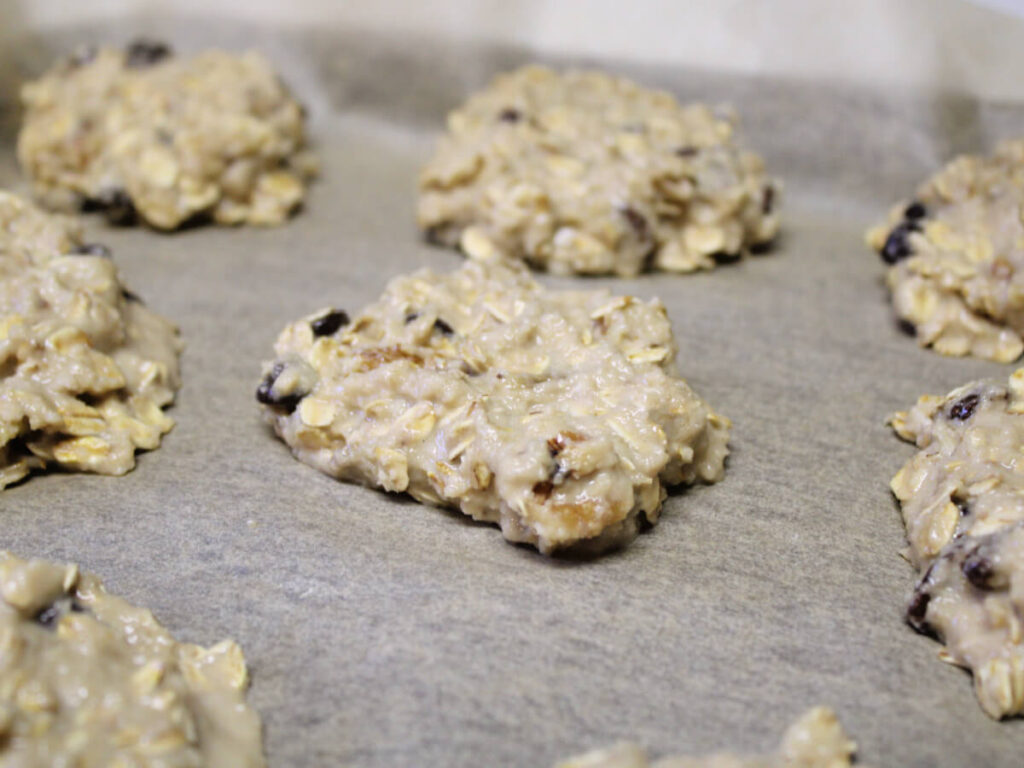
While making the cookies, ask kids to describe the dough as you go — sticky, thick, sweet-smelling, lumpy.
After baking, try describing the cookies before tasting them. No right answers. Just words.
The Moment You’re Creating
This is a lively kitchen bake.
Mashing bananas, stirring oats, talking about words, textures, and smells while something familiar turns into something new. It’s noisy, a little chaotic, and full of commentary — exactly like the book.
No pressure to eat. No pressure to perform. No pressure to turn it into a grammar lesson.
Just let language and baking overlap naturally.
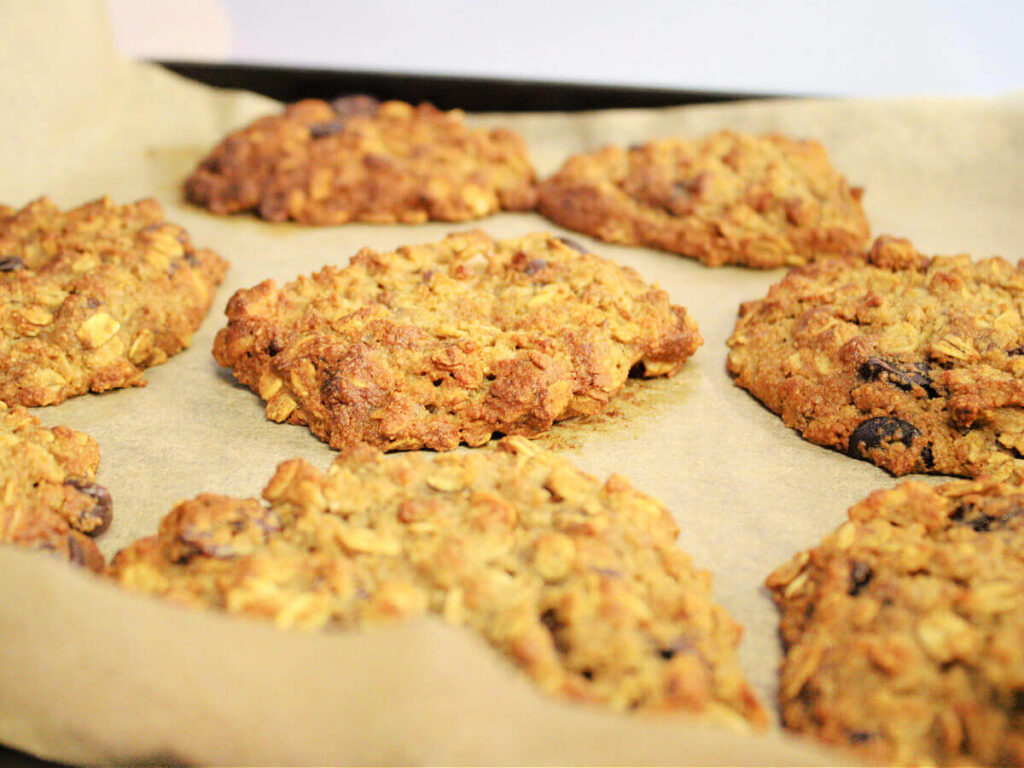
And yes — the cookies were, dare I say, delicious.
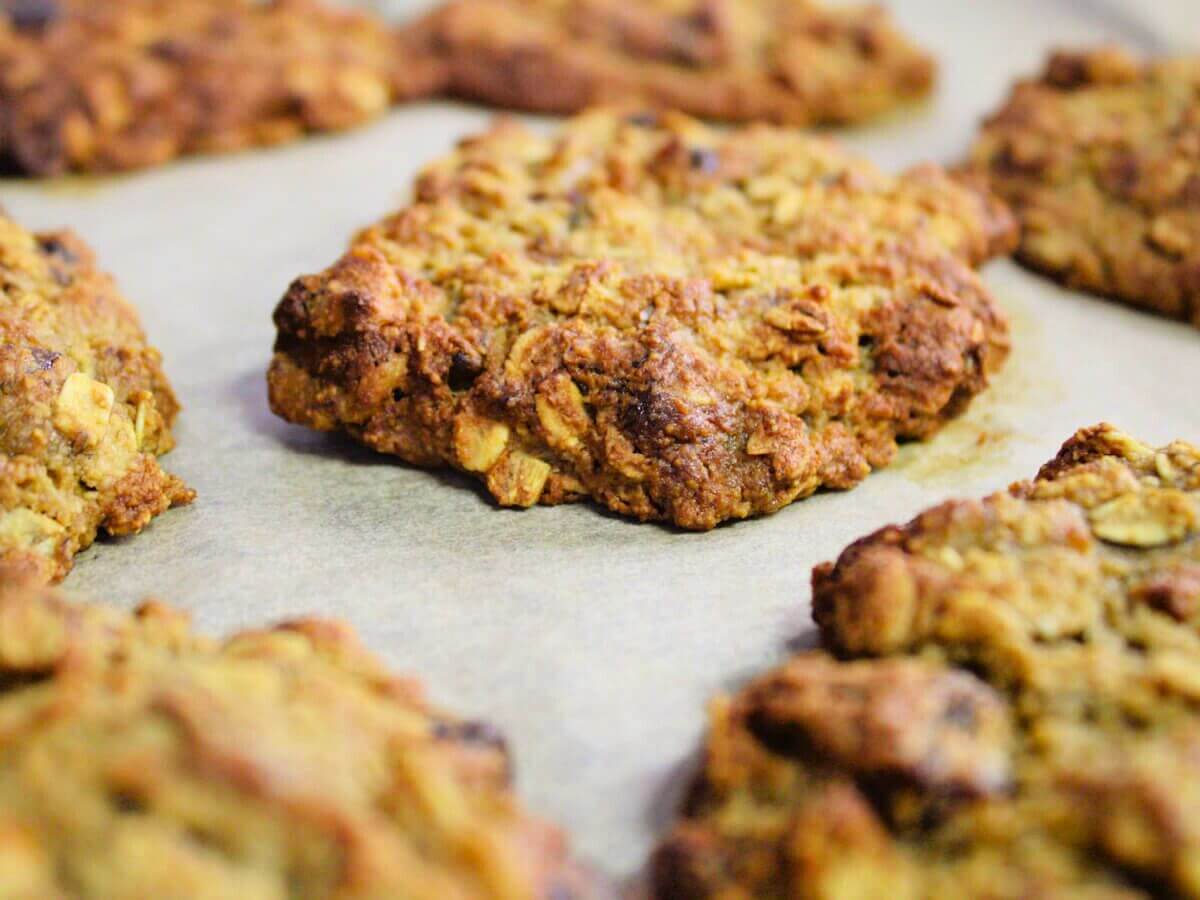
Wholesome banana bread breakfast cookies made with almond flour, rolled oats, tahini, and ripe bananas. Soft, lightly sweet, and easy for kids to customize with walnuts, raisins, or chocolate chips.
Course Breakfast
Keyword banana bread breakfast cookies
Total Time 25 minutesmins
Servings 9
Ingredients
1cupalmond flour
1cuprolled oats
1teaspoonbaking soda
1/4teaspoonsalt
1bananamashed
2teaspoonspure vanilla extract
1/4cuptahini
1/2cupunsweetened vanilla almond milkor any other plant-based milk
1/4 cupbrown sugar
1/4cupchopped walnutsheaping
1/4cupraisins
1/4cupdairy-free chocolate chips
Instructions
Preheat oven to 37f degrees F.
Line a cookie sheet with parchment paper. Set aside.
Combine flour, oats, baking soda, and salt in a medium-sized mixing bowl.
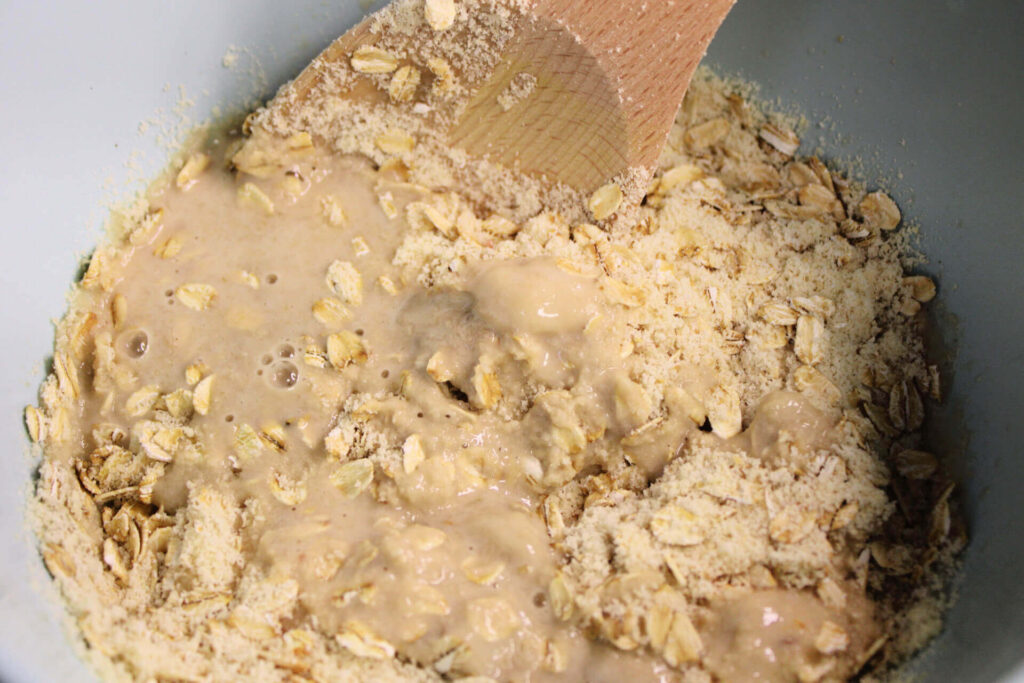
Add the mashed banana, tahini, vanilla, almond milk, and brown sugar to a saucepan. Mix over low heat until the bananas dissolve.
Pour the banana mixture into the dry ingredients. Stir until a dough forms.
Fold in the walnuts, raisins, and chocolate chips.
Use a 1/4 cup to scoop nine balls of dough onto the cookie sheet about one inch apart.
Bake for 15-20 minutes, or until browned slightly on top.
Allow to cool, serve, and enjoy!
Notes
∗These cookies should be stored in the fridge for up to seven days.∗Use a freezer safe container fir longer shelf life (these cookies only take minutes to thaw, so a perfect grab-and-go breakfast or snack)!
This post contains affiliate links. I may earn compensation when you click on the links at no additional cost to you.


 Print Recipe
Leave a Reply