No products in the cart.
People Are Saying “Plant-Based” Instead of “Vegan” — But Why?

M.J. Mercury
March 24, 2026
Language has a funny way of evolving over the years — we all know this.
“Happy Holidays” often replaces “Merry Christmas,” reflecting a broader cultural or political shift. “Miss” is now more common than “ma’am,” perhaps as a way to be polite across all age groups. And the “they/them” conversation stands out as a prominent, often debated example of how language reflects cultural change in real time.
These shifts fascinate me, but the one I’m most interested in as a vegan blogger is why “vegan” has largely shifted to “plant-based” — at least from a labeling perspective.
What the Algorithms Say — and Don’t Say
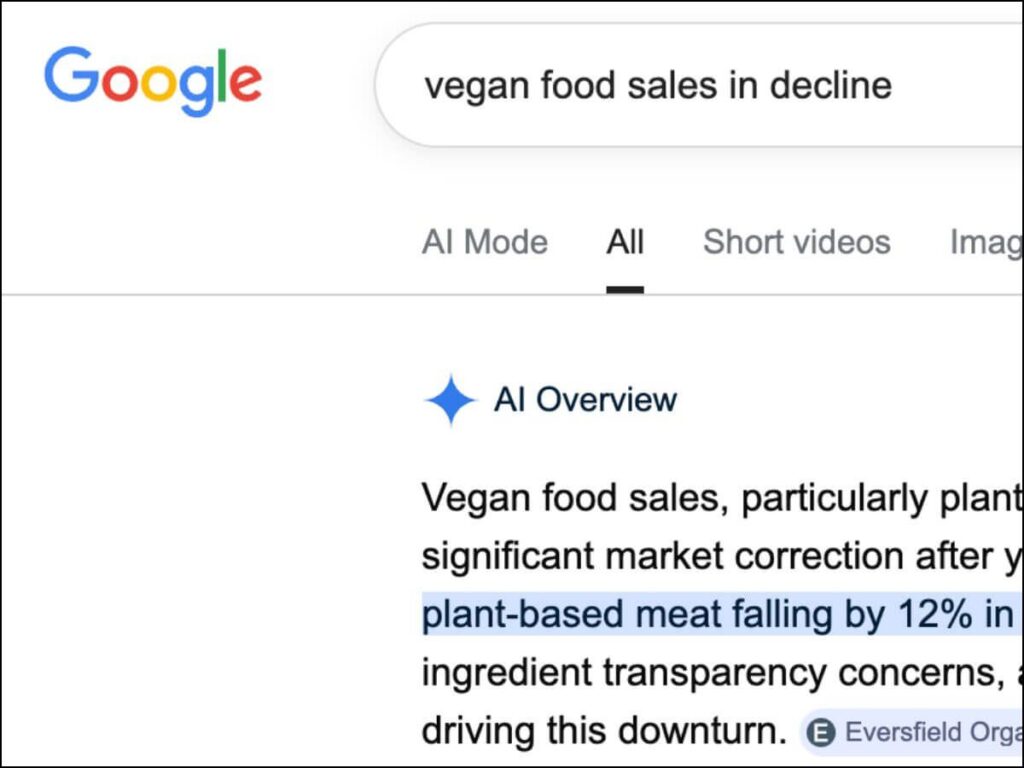
Even when trying to research the topic, the first thing that appears is an AI-generated overview — one I didn’t ask for, but I’ll use it anyway: “Vegan food sales, particularly plant-based meat alternatives …”
Something peculiar happens in the first five words of that summary. The word “vegan” appears first and reflects exactly what I searched — “vegan food sales in decline” — but just three words later, the language shifts to “plant-based.” In fact, within the full summary, “plant-based” appears five times, while “vegan” is mentioned only once.
This isn’t exactly proof of anything, but it does reflect what I’ve been noticing in my own experience — especially in stores like Whole Foods Market and Trader Joe’s. I see fewer labels and signs with a bold “vegan” message and, instead, more “plant-based.”
At Whole Foods Market, the vegan symbol is still present on a wide range of products, but the marketing feels different — “plant-based” is what’s front and center.
At Trader Joe’s, I’ve noticed fewer items labeled vegan, although I can’t say for certain how accurate that is, especially since I’m basing it on my local stores in Rhode Island and what I’ve heard echoed in YouTube comments. Does that mean they’re selling more plant-based items instead? Well, I’m not entirely sure.
What I do feel sure about is this: across commercials, store signage, social media, and even restaurant messaging, “plant-based” appears far more often than “vegan” in the marketing of these foods. The vegan label is still there — tucked away, almost hidden unless you’re looking for it. And trust me, we vegans are looking … or are we?
Vegan vs. Plant-Based — What’s the Difference?

It’s worth pausing here to look at the differences between these two terms.
“Vegan” has traditionally been more than just a way of eating. It’s often tied to ethics — animal welfare, environmental concerns, and a broader lifestyle that extends beyond food.
“Plant-based,” on the other hand, is typically used to describe how someone eats. It focuses on food — meals centered around plants — without necessarily carrying the same ethical or lifestyle implications.
One is often about identity. The other is more about behavior.
The most obvious explanation for this shift from “vegan” to “plant-based” is that it may be driven more by diet than ethics. So does that mean saving animals was simply a fad — something that has passed its time, replaced by a more flexible, food-focused approach?
Possibly. Or maybe both can exist at the same time, with one simply making more noise than the other.
Where Marketing Meets Meaning
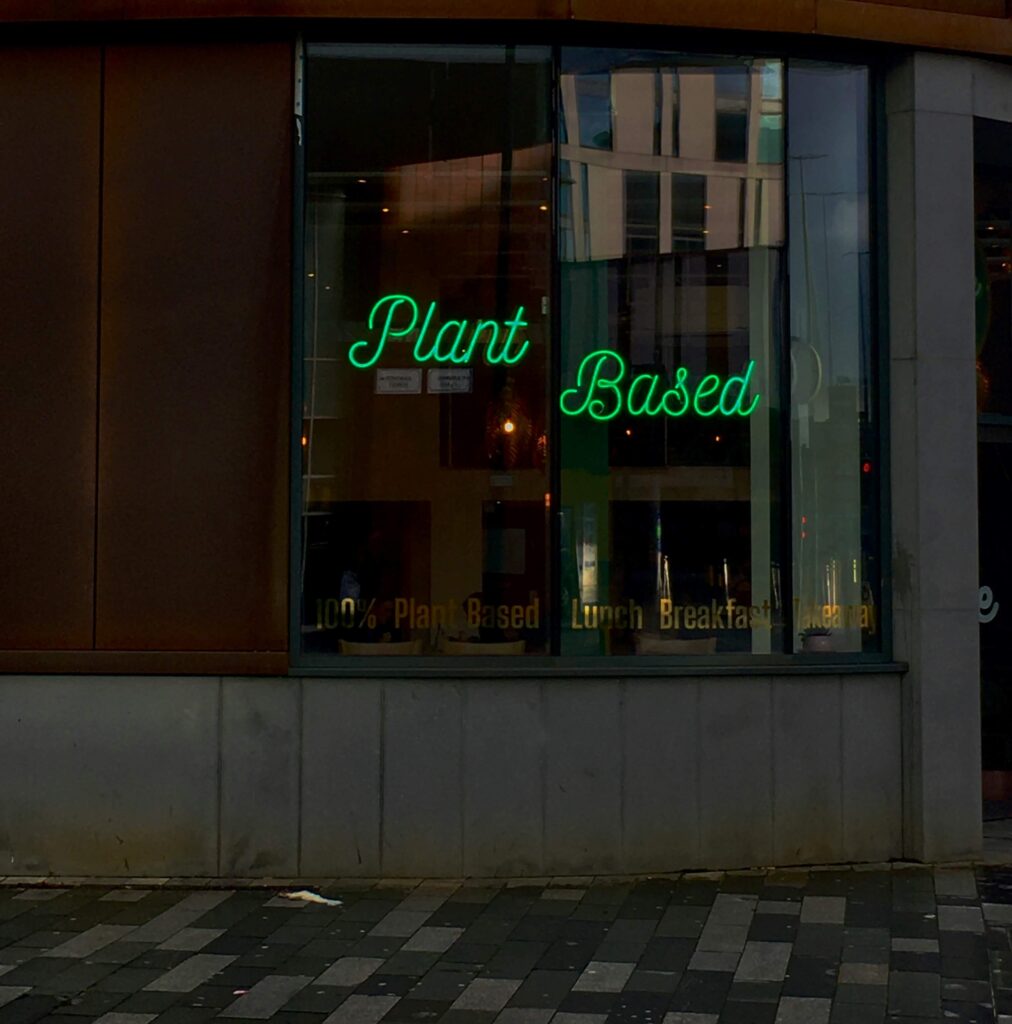
It’s also worth considering that “plant-based” has become a powerful marketing strategy. It’s a term that feels more approachable, less restrictive, and easier for a wider audience to adopt. But if that shift encourages people to eat more plants, more whole foods, and think more intentionally about what they consume, then maybe that’s not entirely a bad thing.
I find myself leaning more toward using the term “plant-based,” especially after completing a certification in plant-based nutrition through eCornell. It made me realize just how much what we eat impacts how we feel, our reliance on medications, and even how long we live. But I still care deeply about animals — that hasn’t changed
So I’ll keep looking for that hidden vegan label — because it still matters to me. And, I imagine, to most diehard vegans.

If you’re interested in more thoughts like this — the ideas, questions, and curiosities around how we eat — you can join me in my weekly column, Life Edit on Substack
(Visited 30 times, 16 visits today)
Leave a Reply